But The Pen Was Never the Point
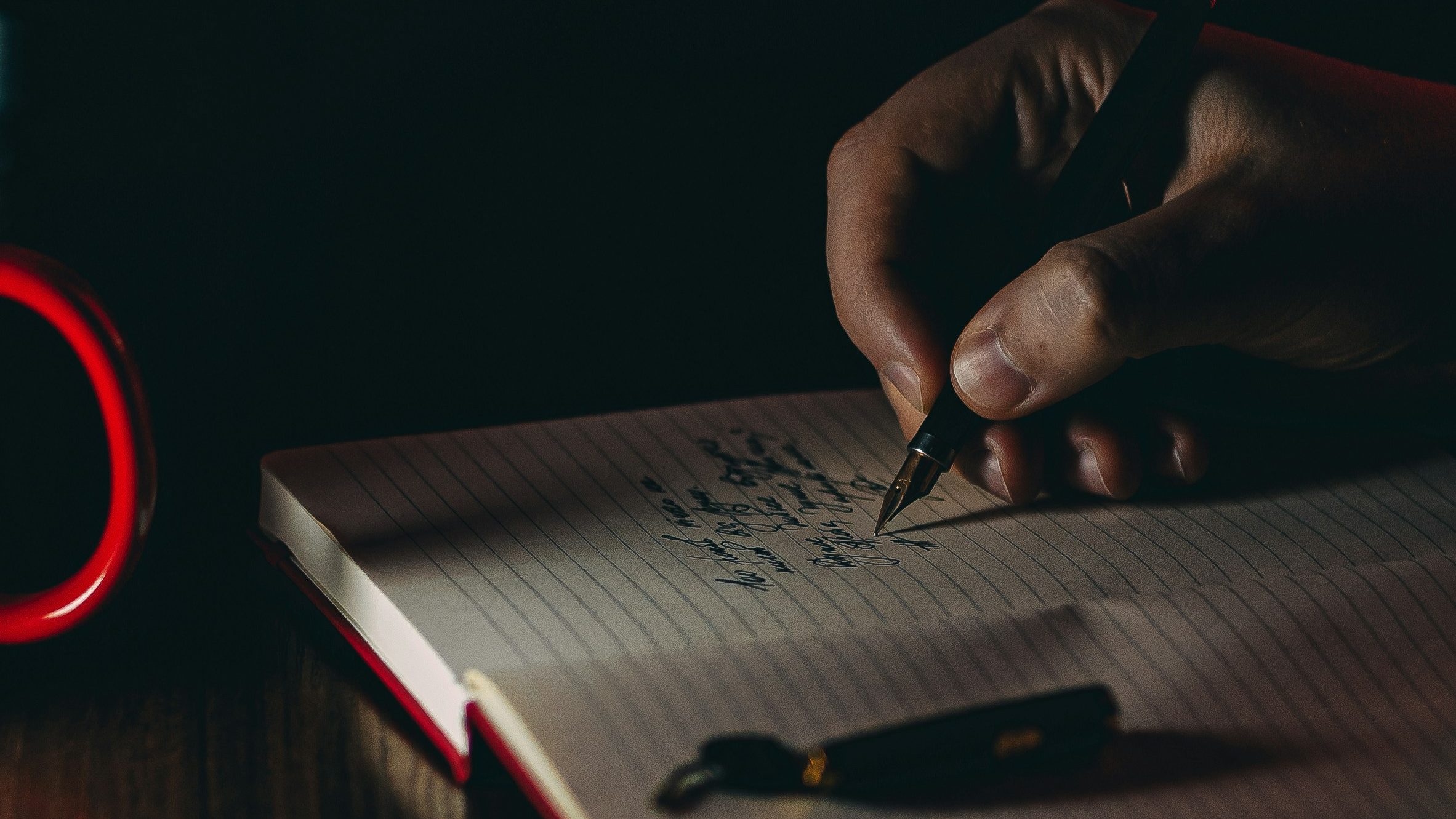
Everyone knows the line.
“Sell me this pen.”

For years, “sell me this pen” has been framed as a test of persuasion: confidence under pressure, charisma in a room, the ability to create urgency on command. In that moment, the seller controls the space. The air is shared. The silence is strategic. The buyer cannot scroll away.
But that world is gone.
Today, if you ask someone to sell you a pen, they will not slide it across a polished table. They will post it into a feed already crowded with louder, faster things. Probably even have Selena Gomez or David Beckham hold it with a pose. Because online, attention is not given, it is defended. No one is waiting for you to create a problem. They are moving past solutions they never asked for, closing tabs before your sentence even finishes loading.
You cannot say, “Write your name.” They can simply keep scrolling.
So the question is no longer whether you can create need in the moment. The real question is whether you can create meaning before the need even exists. Let me tell you how The Other Script will do just that:
A friend of mine recently found a small stack of letters her grandfather had written to her. They had been tucked away quietly, preserved without ceremony, waiting for the day she would read them without him here. The paper was still crisp. The ink had not faded. His handwriting moved across each page exactly as he had left it.
He is gone now, but his voice is not.
That is what feels rare. We live in a time where most of what we write disappears. Messages are deleted. Phones are replaced. Entire conversations dissolve into forgotten archives. Our words move quickly, but they rarely stay long enough to become part of someone’s history.
Those letters were different. They were tangible proof that someone had paused long enough to choose his words carefully and place them somewhere permanent. They carried intention. They carried time. They survived.
That is how you sell a pen now.
You do not sell it as ink or as a tool. You sell it as a decision to leave something behind that will not vanish when a device resets or a password is forgotten. A pen becomes a symbol of permanence in a culture designed for disappearance. It becomes a choice to fix a moment in time. It becomes authorship in a world where many people feel like they are being written by algorithms instead of writing their own story.
In a room, you create pressure. On a screen, you create resonance. Pressure can force attention for a moment. Resonance earns it without asking.
The pen was never the point.
The point is this: we are not trying to move products. We are trying to move people. And the communicators who will matter most are not the ones who can command a room, but the ones who can reach someone alone behind a screen and leave something that stays. And that is just one tie that the pen has. Memory. But there is still future.
It is about leaving proof that you were here, that you loved, that you thought of someone long before they needed to remember you.
To sell you a pen, I do not need a celebrity, a marketing budget, or a perfectly engineered strategy. I only need to remind you of YOUR story that was, is and will be. Writing your crush’s phone number on your hand because you left your phone at home. The vows you write on a tissue the night before your wedding. The signature you print when you buy your first home. Sitting at the kitchen table helping your children with their homework. The letters you write for them to open one day when you are no longer there.
In a world where almost everything disappears, the most powerful thing you can offer is something that stays.
Hope you enjoyed the read!
– The Other Script
Leave a Reply